Focus Topic

Digital Sovereignty: Why European Enterprises Must Act Now

Why Digital Sovereignty Becomes Increasingly Relevant

In an increasingly digitalised world, the ability to exercise autonomous control over one's own data, technologies, and digital infrastructures becomes a critical success factor. That this topic is becoming ever more important for decision-makers is evident not only amongst our longstanding clients, but also at this year's Heise IT Summit "Digital Sovereignty – Foundation for Resilient IT".

The vast majority of technologies deployed in Germany originate from abroad: American enterprises provide 80-90% of deployed chips, 70% of utilised cloud capacities, and 70% of Large Language Models for Generative AI.

These dependencies represent not merely a theoretical risk, but a concrete threat to the operational capability of German enterprises. For instance, the American hyperscalers AWS and Microsoft have not denied that they would, if necessary, transfer European data to their governmental authorities pursuant to the US Cloud Act. A further dramatic example of political influence by tech giants: Microsoft's enforcement of email restrictions against the Chief Prosecutor at the European Court of Justice following Trump's sanctions against four judges. Particularly during periods of geopolitical tension, digital sovereignty thus becomes a strategic necessity.


What Does Digital Sovereignty Really Mean?


Digital sovereignty describes far more than mere technological independence. It concerns the ability to exercise autonomous control over digital technologies, data, and infrastructures whilst making independent decisions. It is not a call for complete autarky, but rather the foundation for self-determined action in the digital realm.

Digital sovereignty is a state wherein enterprises are not dependent upon individual digital actors, but can negotiate fair prices and determine themselves where their data is stored. Bernie Wagner, CEO of Stack IT, encapsulates this succinctly: "Digital sovereignty is the ability to walk away from the negotiating table."

The Three Pillars of Digital Sovereignty – How Do You Secure Your Digital Future?

To evaluate potential measures, one should approach digital sovereignty through three dimensions according to Gartner: Data Sovereignty, Operational Sovereignty, and Technological Sovereignty.

  • 1. Data Sovereignty: Who Controls Your Most Valuable Resources?

    An enterprise's digital sovereignty begins with control over its own data. Data sovereignty means complete control over one's own data – from storage through processing. For executives of German corporations, this is particularly relevant, as many enterprises rely upon foreign software applications and cybersecurity solutions.

    In the age of AI, this aspect becomes even more critical: Digital sovereignty ultimately means the right to control one's own data – including the capability to delete and restore data when required. This control is especially important for compliance with regulations that restrict data flows across borders.


    Strategic Approaches:


    Transparent data processing: Implementation of systems providing complete transparency over data flows, e.g., monitoring tools documenting all data access and movements
    Open-source software: Utilisation of open-source solutions instead of proprietary software to reduce dependencies
    Data encryption: Consistent encryption of all sensitive data, with keys remaining exclusively within one's own enterprise
    Implementation of European cloud solutions with guaranteed GDPR compliance
    Regular review of data processing contracts with external service providers


    A targeted data strategy is the first step towards greater data sovereignty – Intero Consulting has developed its own framework for this. More information can be found here.

  • 2. Operational Sovereignty: Can You Ensure Operation of Your Critical IT Components?

    Control over one's own IT infrastructure becomes increasingly important given geopolitical tensions. Approximately 75% of all cloud data resides with the three leading hyperscalers Google, Azure, and AWS, all three of which are US-based. This strong dependence of the EU on foreign tech giants for critical infrastructure poses considerable risks for privacy, security, and economic autonomy.

    The geopolitical tensions between Europe and the USA represent a risk for European hyperscaler customers, but simultaneously present significant opportunities for European cloud service providers.


    Strategic Approaches:


    • Consider sovereignty in sourcing decisions to diversify suppliers, e.g., building hybrid solutions (cloud service providers and on-premise data centres) or multi-cloud approaches (multiple cloud service providers ideally in different geopolitical regions)
    • Development of contingency plans for critical infrastructure components
    • Strategic investments in European technology alternatives

  • 3. Technological Sovereignty: How Independent Are Your Digital Decisions?

    Technological sovereignty enables enterprises to shape their digital future autonomously. The challenge lies in finding a balanced relationship between the advantages of global technology markets and the necessity of maintaining control over critical technologies. Technological sovereignty does not mean complete isolation, but rather the ability to act autonomously in an interconnected world.

    For enterprises, this means retaining control over strategically important technologies and minimising dependencies.

    The situation is particularly critical regarding hardware semiconductors, as over 90% of the most advanced chips are produced in Taiwan. From a software perspective, AI causes particular concern, as most AI applications are based upon Large Language Models from the USA (70%) or Asia (15%).

    When comparing the three pillars of Digital Sovereignty, Technological Sovereignty represents the greatest challenge. Reducing this dependency requires clear political objectives that enable aligned coordination between industry and academia.

How Can Enterprises Enhance Their Digital Sovereignty? Reassessing Trust – Where Lie Your Greatest Dependencies?

The trustworthiness of international partners plays a decisive role. German enterprises have high trust in partners from the EU, whilst trust in partners from third countries falls considerably lower. A shared understanding of values and unified legal framework create not only enhanced trust in secure operations and data security, but also ensure reliable implementation of regulatory requirements.

A comprehensive sovereignty strategy must consider the data, hardware, networks, and software protection measures that contribute to defining one's own sovereign IT landscape.


Concrete Measures for Enhanced Digital Sovereignty:


  1. Conduct Risk Assessment
    • Identify critical dependencies
    • Analyse impacts of geopolitical risks
  2. Diversify Suppliers
    • Build strategic partnerships with European providers
    • Focus on interoperable solutions
    • Deploy open-source solutions
  3. Invest in Own Competencies
    • Build internal expertise in key technologies
    • Cooperations with European research institutions
  4. Prioritise End-to-End Encryption
    • As cybersecurity experts emphasise, digital sovereignty challenges us to "navigate complex areas of technology, politics, and human rights. Through promoting unrestricted E2E, we can create a safer digital future"
Conclusion:

Act Now for a Sovereign Digital Future

Digital sovereignty is not a theoretical concept for German enterprises, but a strategic necessity. Industry experts forecast that by 2028, over 50% of multinational enterprises will have digital sovereignty strategies, compared to fewer than 10% today.

The good news: With a structured approach, enterprises can enhance their digital sovereignty step by step whilst simultaneously benefiting from the advantages of international cooperation. Digital sovereignty is ultimately about how technologies and services are regulated and controlled – similar principles apply to enterprises and states alike.


Your Next Steps with Intero Consulting


With our extensive experience in IT transformation projects, Intero Consulting supports you in strengthening your digital sovereignty. Our expertise in digitalisation, IT strategy, and provider management helps you shape your digital future autonomously.

Contact us for a non-binding initial consultation to analyse your current risks and derive individual measures for enhancing your digital sovereignty.

Your Experts for Digital Souveranity

Dies ist ein Portrait von Nadine Goeppel.

Nadine Göppel

Partner
[Translate to English:]

Christin Mädler

Senior Consultant

Further Impulses on IT Controlling

May 12th 2026

AIOps as an Enabler for IT Operations in the Financial Sector

27.04.2026

Strategically Replacing Core Applications: Your Guide to Successful Migration

18.03.2026

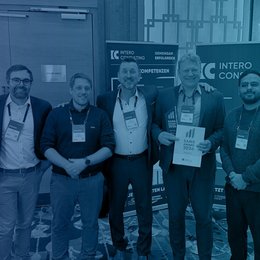
SAMS DACH 2026: R+V wins Award with Intero Consulting

03.03.2026

Cloud Sovereignty: European Alternatives to US Hyperscalers

Focus Topic

SAM Optimisation: Save Up to 30% on Software Costs

Focus Topic

Digital Sovereignty: Why European Enterprises Must Act Now

Dies ist ein blau eingefärbtes Bild von Architektur.
IT-Steuerung

IT Outsourcing Consultancy: From Strategy to Successful Implementation

21.02.2025

Overcoming Vendor Lock-In: 3 Success Factors for Migrating Business-Critical IT Systems

16.12.2024

Contract revision in IT companies

Header mit Schachbrett für einen Impuls über strategisches und operatives Providermanagement
05.11.2024

Strategic and operational provider management

22.12.2023

Successful implementation of IT outsourcing

04.12.2023

Best of Consulting Mittelstand Award 2023

17.08.2023

Cloud Native Conference 2023

05.07.2023

Best of Consulting Mittelstand 2023

05.07.2023

Challenges in telecommunications and IT

23.05.2023

Price increases for software

27.03.2023

Inflation in the IT sector

30.11.2022

Best of Consulting Mittelstand 2022 - We have been awarded!

13.09.2022

RPA & Process Mining

27.06.2022

Order2Cash

28.04.2022

SAMS 2022

17.01.2022

WEB SUMMIT 2021

24.11.2022

Best of Consulting Mittelstand 2021 - We have been awarded!

12.10.2021

Whitepaper Cloud journey: Roadmap to the cloud

05.10.2021

Cloud Computing Whitepaper

29.09.2021

Whitepaper Cloud Implementation and Migration

11.08.2021

Outsourcing Contract Agreement (OCA-Score)

Our Competence Center IT Controlling