21.02.2025

Overcoming Vendor Lock-In: Three Success Factors for Migrating Business-Critical IT Systems

Overcoming Vendor Lock-In: Key Success Factors for Migrating Business-Critical IT Systems

Significant price increases in the software market are posing substantial challenges for businesses. Legacy software systems, often developed over time, increasingly lead to critical vendor lock-in—particularly for systems essential to core operations. A real-world example demonstrates how to break this dependency:


Case Study: 

Multi-Million Savings Achieved Within Tight Deadlines


A long-standing client faced the expiration of its software licence agreement. Following the acquisition of the vendor, costs threatened to rise by over 100%. The objective: replacing a central automation platform for core banking operations within 18 months.

Together, we delivered:


  • Timely implementation of an alternative solution before contract expiry
  • Annual savings in the millions through reduced licensing costs
  • Future-proof IT architecture with minimal operational disruption


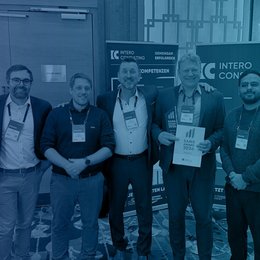
For this achievement, Intero Consulting was honoured with the Best of Consulting Award (Manufacturing & Operations category).

3 Success Factors for Your IT Migration

How can you successfully replace business-critical systems despite Vendor Lock-In?

Three strategic levers made the difference:

1. Project Management as the Engine of Success: Expertise and coordination

Software migrations demand deep technical expertise and enterprise-wide coordination—particularly from experienced project management. With numerous dependencies and interfaces, professional coordination is essential.

How did we approach this?


  • Hybrid teams of internal and external experts
    While internal experts know the systems and application scenarios down to the last detail, external partners bring the necessary know-how for implementing the new solution. A clear allocation of roles and well thought-out coordination by the project management team are crucial. It must penetrate technical details to a certain depth and communicate them clearly to all expert teams.
  • Technical depth meets strategic foresight
    The project team must not only understand and manage technical issues but keep corporate objectives in focus. This ensures dependencies on other systems (e.g., ERP, CRM) are managed and downtime minimised.
  • Lessons learned from practice:
    In our project, rigorous technical change management ensured smooth operations—from night-time migrations of individual modules to rollback plans for critical scenarios.

2. Big Bang vs. Iterative: Choosing the Right Migration Approach

For migrating production environments, two approaches exist: “all at once” or step-by-step.

Both a full Big Bang migration and a phased approach over time are viable. The goal is to minimise operational disruption, ideally outside business hours. Guided by this principle, available options must be weighed carefully.

Each approach has pros and cons:


Big Bang Iterative Migration
Shorter overall duration Lower risk per step
High outage risk Continuous optimisation potential
Ideal for simple systems Perfect for complex legacy setups


Our solution: A hybrid model.

We migrated modules by ascending complexity—each as a “mini-Big-Bang” outside business hours. This enabled us to:

  • Identify error sources early,
  • Build team knowledge iteratively,
  • Limit total downtime to under 12 hours.

3. Consistent prioritization: Focusing on Business-Critical Features

If migration must proceed under tight deadlines (e.g., expiring software licences), fully replicating all legacy features in the new system may not be feasible.

In such cases, prioritise features ruthlessly:


  • Phase 1: Prioritise the business-critical features that secure the operations.
  • Phase 2: Refactor less critical functions post go-live.


Real-world example:
The client deferred non-essential features initially. Post-core migration, these needed features were rebuilt more efficiently in the new environment—free from time pressure. Features which were not used anymore could be deleted.

With targeted planning and coordination, even ambitious timelines for replacing central IT systems can be met.

Conclusion: Dissolution of vendor lock-in as an opportunity for simultaneous modernisation

Replacing legacy systems requires courage—but with the right strategy, it becomes a growth catalyst.

Your success checklist:


  • Resource planning: Hybrid project management with technical expertise.
  • Migration approach: Iterative with clear rollback protocols.
  • Feature prioritisation: Business-critical first.
Sustainable Strategies for Your Success:

Facing similar challenges?

  • Imminent licence cost increases?
  • Technological dead ends due to outdated systems?
  • Lacking flexibility for digital transformation?


Whether rising software costs or legacy tech burdens, our experts support seamless system transitions.

Contact our IT governance experts—we’ll show you how to break free from costly monopolistic vendors in 12-24 months.

Contact us for a no-obligation strategy discussion.

Your contacts on Vendor Lock-In

Dies ist ein Portraitfoto von Dominik Sachse.

Dominik Sachse

Partner
Dies ist ein Porträtfoto von Damian Koch.

Damian Koch

Senior Consultant

Further Impulses On IT Controlling

3.12.2025

Digital Sovereignty: Why European Enterprises Must Act Now

Dies ist ein blau eingefärbtes Bild von Architektur.
IT-Steuerung

IT Outsourcing Consultancy: From Strategy to Successful Implementation

21.02.2025

Overcoming Vendor Lock-In: 3 Success Factors for Migrating Business-Critical IT Systems

16.12.2024

Contract revision in IT companies

Header mit Schachbrett für einen Impuls über strategisches und operatives Providermanagement
05.11.2024

Strategic and operational provider management

22.12.2023

Successful implementation of IT outsourcing

04.12.2023

Best of Consulting Mittelstand Award 2023

17.08.2023

Cloud Native Conference 2023

05.07.2023

Best of Consulting Mittelstand 2023

05.07.2023

Challenges in telecommunications and IT

23.05.2023

Price increases for software

27.03.2023

Inflation in the IT sector

30.11.2022

Best of Consulting Mittelstand 2022 - We have been awarded!

13.09.2022

RPA & Process Mining

27.06.2022

Order2Cash

28.04.2022

SAMS 2022

17.01.2022

WEB SUMMIT 2021

24.11.2022

Best of Consulting Mittelstand 2021 - We have been awarded!

12.10.2021

Whitepaper Cloud journey: Roadmap to the cloud

05.10.2021

Cloud Computing Whitepaper

29.09.2021

Whitepaper Cloud Implementation and Migration

11.08.2021

Outsourcing Contract Agreement (OCA-Score)

Our Competence Center IT Controlling