Generative AI is no longer a technology of the future. Today, it is a key competitive factor for companies and national economies alike. German companies need AI solutions to boost their capacity for innovation, but in doing so they become increasingly dependent on US tech corporations, not least because European alternatives are not yet competitive. This dependency poses strategic and geopolitical risks to the long-term competitiveness of German companies. The challenge became concrete in June 2026, when the US government used export controls to block access to Anthropic's most powerful AI models for all foreign nationals. No warning, no transition period. What many had dismissed as a theoretical risk became reality with a single government decision.1

Why AI sovereignty is becoming a competitive factor for German companies
What does AI sovereignty mean?
AI sovereignty refers to full control over the three core components of AI systems: computing power, cloud infrastructure and language models (LLMs). These three core components form the basis of all common AI tools on the market, and today they are predominantly in American hands.
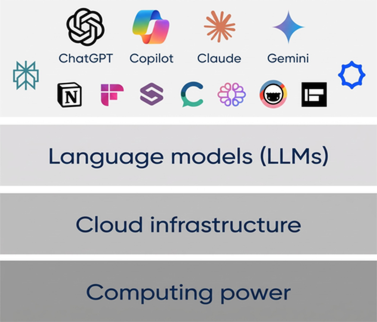
Figure 1: The three core components of AI sovereignty
The three components of AI sovereignty: where Europe stands today
1. Computing power: Nvidia's 85% monopoly as an obstacle
Computing power is the foundation of every AI application. Control over specialised chips determines who can train and deploy AI systems, and who cannot.
The reality: Nvidia controls approximately 85% of the semiconductor market for AI chips2. Even European gigafactories need this technology. The European Commission's European Chips Act mobilises €43 billion3 to strengthen Europe's semiconductor competitiveness, but European newcomers are currently not strong enough to break American dominance.
2. Cloud infrastructure: 72% US control over European data
US providers such as Microsoft and Google control approximately 72% of European cloud capacity4. This hyperscaler dominance means that European corporate data often ends up on American servers, despite GDPR requirements.
European cloud providers are growing their revenues, but European products still lag significantly behind the American hyperscalers, particularly in terms of functionality and scalability. The dependency remains.
You can find further information on current developments in cloud sovereignty here.
3. Language models: 73% from the US, 15% from China
The concentration is particularly pronounced in language models. 73% of all language models of recent years originated in the US and 15% in China, with only 12% coming from Europe5. Development is concentrated among tech giants such as OpenAI, Google and Anthropic.
European alternatives are emerging but are underfunded: Mistral AI (France) and DeepL (Germany) are developing powerful models. However, the funding gap is considerable: while OpenAI received over USD 13 billion from Microsoft, Mistral AI raised only around €3.2 billion across several funding rounds.6, 7 This gap is reflected in the pace of innovation and in the service portfolio.
Government investment as an indicator of the future: Europe compared with the US
Governments have the greatest opportunity to enable technological innovation. Here, the comparison between Europe and the US reveals another significant deficit: the US invests roughly three times as much in its own infrastructure as Europe. Yet there is cause for hope: over the last five years, Europe has significantly increased its investment in AI technologies. Particularly noteworthy are the "AI Continent Action Plan", with a total investment volume of €200 billion8, and the aforementioned European Chips Act, with an additional investment of €43 billion.
How can Europe catch up?
As with cloud sovereignty, AI is not simply a matter of "all or nothing". This becomes clear when looking at the three dimensions of digital sovereignty:
-
1. Data sovereignty: GDPR protection is possible, but with limits
What is possible: German companies can process their training and input data in a GDPR-compliant manner by using cloud providers with European servers. This significantly reduces the risk of US data access, even if the underlying LLMs come from US providers.
What remains open: Control over the use of specific servers can only be achieved via the language models' direct API interfaces. As a result, additional functions available in the vendors' own tools usually have to be forgone.
-
2. Operational sovereignty: European regulation as a competitive advantage
What is possible: The EU AI Act creates a regulatory framework that gives European companies certainty when implementing AI and puts European AI providers on an equal footing with US players. This regulation promotes transparency, governance and accountability instead of technological secrecy. This is a genuine European competitive advantage.
What remains open: Regulation alone is no substitute for technological innovation. While Europe regulates, the US innovates faster. Moreover, many European companies still need to build up the expertise to truly put AI governance into practice.
-
3. Technological sovereignty: open-weight models as a potential game changer
What is possible: Open-weight models (AI models whose trained weights are publicly available) enable companies to run powerful language models locally. They reduce dependence on proprietary US providers, as they can be hosted on a company's own infrastructure, customised and used without ongoing API costs.
What remains open: Open-weight models such as Llama or Mistral are increasingly closing the performance gap to proprietary models, but they require substantial in-house hardware and operational capacity. For many companies, the effort involved in operation and maintenance remains a real hurdle.
The path to independent AI sovereignty for German companies
The right time to act is now: German companies can actively shape their AI sovereignty without waiting for political decisions.
Three steps towards greater AI sovereignty:
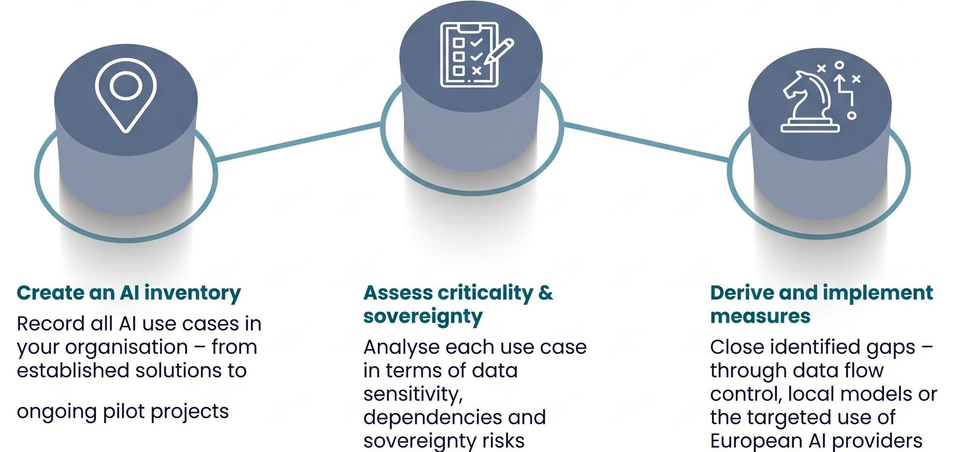
Figure 2: Three steps towards greater AI sovereignty


Initial consultation on your AI sovereignty strategy
Intero Consulting supports you in developing and implementing your individual AI sovereignty strategy. With our experience in IT governance, digitalisation and procurement, we guide you from analysis through the preliminary study to implementation.
Contact us for a no-obligation initial consultation on your individual challenges in the area of AI sovereignty.


References:
[1] WELT. (2026, June 13). Fable 5 und Mythos 5: Angst um die nationale Sicherheit – US-Regierung sperrt Anthropics Top-KI-Modell für Ausländer. https://www.welt.de/wirtschaft/article6a2d08607e682fc37fbf8385/fable-5-und-mythos-5-angst-um-die-nationale-sicherheit-us-regierung-sperrt-anthropics-top-ki-modell-fuer-auslaender.html
[2] Silicon Analysts. (2026, February 21). NVIDIA GPU market share 2024–2026: 87% peak, what comes next. https://siliconanalysts.com/analysis/nvidia-ai-accelerator-market-share-2024-2026
[3] European Commission. (n.d.). European Chips Act. Shaping Europe's digital future. Retrieved October 15, 2026, from https://digital-strategy.ec.europa.eu/en/policies/european-chips-act
[4] Wooden, A. (2022, September 28). European cloud players face declining market share as US hyperscalers clean up. Telecoms.com. https://www.telecoms.com/public-cloud/european-cloud-players-face-declining-market-share-as-us-hyperscalers-clean-up
[5] Saueressig, T. (2024, January 15). KI – Handeln statt Hadern. SAP News Center. https://news.sap.com/germany/2024/01/ki-handeln-statt-hadern/
[6] Levy, A., & Capoot, A. (2025, October 29). Microsoft takes $3.1 billion hit from OpenAI investment. CNBC. https://www.cnbc.com/2025/10/29/microsoft-open-ai-investment-earnings.html
[7] Startupintros. (n.d.). Mistral AI. Retrieved October 10, 2026, from https://startupintros.com/orgs/mistral-ai
[8] European Commission. (2025, February 10). EU launches InvestAI initiative to mobilise €200 billion of investment in artificial intelligence [Press release IP/25/467]. https://ec.europa.eu/commission/presscorner/detail/en/ip_25_467
Further Impulses on IT Controlling